
MIDTRANS SHIPPING AND SERVICES · Established 1998Syria, UAE, Dubai, Jebel Ali, China, Turkey, Europe

Container guide

Which container suits your cargo? A guide to 20 ft, 40 ft and 40 ft high cube sizes

Before you book, know which container you actually need. The choice depends not only on volume but on the weight of the cargo, the shape of the packages and how they are loaded. These are the approximate sizes of the three most used containers, and when each one fits.

20 ft: about 33 m³40 ft: about 67 m³40 ft high cube: about 76 m³

Published · MIDTRANS SHIPPING AND SERVICES

Reviewed by Khaldoun Al-Khouli, General Manager

Sizes

Approximate internal dimensions of the three containers

These are approximate internal dimensions (length × width × height). They vary slightly between containers and between shipping lines:

The volume you can actually use is lower than these figures, because packages never fill every gap and some space is left for loading and securing. So do not plan on the full volume when deciding how many containers you need.

  • 20 ft: 589 × 235 × 239 cm, about 33 m³
  • 40 ft: 1203 × 235 × 239 cm, about 67 m³
  • 40 ft high cube: 1203 × 235 × 269 cm, about 76 m³
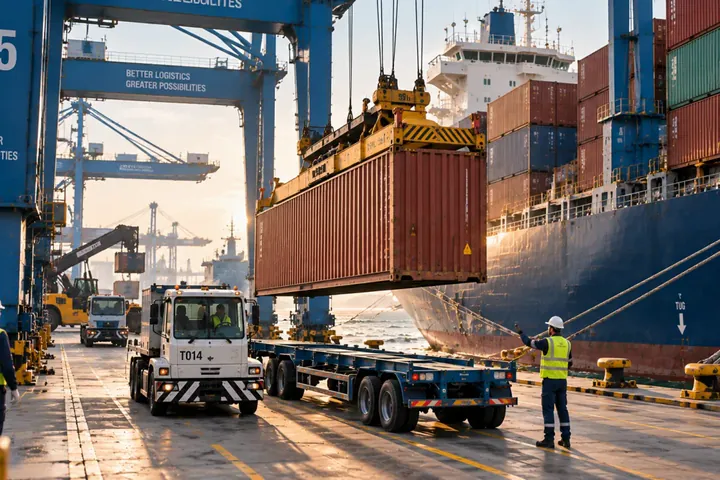
Illustrative image
Illustrative image

Weight or volume

When to choose 20 ft and when to choose 40 ft

Heavy, dense cargo such as steel, tiles, chemicals and packed food usually reaches the weight limit before it fills the container. For this cargo a 20 ft is usually the practical choice, because a 40 ft will not carry twice the weight.

Light, bulky cargo such as furniture, cartons, plastic goods and clothing fills the container by volume before weight. Here a 40 ft or 40 ft high cube costs less per cubic metre. The allowed payload varies by shipping line and container, so we confirm it when you book.

High cube

What does a 40 ft high cube add?

A high cube has the same length as a 40 ft container but is about 30 centimetres taller inside. That difference adds about 9 cubic metres and allows an extra layer of packages or taller pieces standing upright.

A high cube suits light, bulky cargo and tall packages. If your cargo is wider or taller than the container door, the answer is a special container such as a flat rack or open top, not a high cube.

Before booking

Work out the load first, then book

Instead of estimating, calculate. The Container Load & Proforma app draws a 3D load plan for containers and trucks from the dimensions and number of your packages, with a PDF report and an Excel file.

If your cargo is less than a full container, LCL shipping may cost less than booking a container you cannot fill. Send us the volume and weight and we will compare both options, or ask for full container shipping to Syria directly.

  • Enter the package dimensions and count
  • Review the 3D load plan
  • Compare a full container with LCL
Share this article

FAQ

Frequently asked questions

How many cubic metres does a 20 ft container hold?

About 33 cubic metres inside. The usable volume is lower, depending on the shape of the packages.

What is the difference between a 40 ft and a 40 ft high cube?

Length and width are the same, but the high cube is about 30 cm taller inside, so it holds about 76 cubic metres instead of about 67.

Does a 40 ft carry twice the weight of a 20 ft?

No. The allowed payloads are close and vary by shipping line and container, which is why a 20 ft usually suits heavy cargo.

How do I know how many containers I need?

Enter your package dimensions and count in the Container Load & Proforma app for a 3D load plan, or send them to us and we will work it out with you.

Not sure which container you need?

Send us the dimensions and weight of your cargo, and we will work out the right container and send you a quote.

TrackQuoteChat with us