
Air Freight Services
Air Freight in Syria from Dubai to Worldwide Destinations
Air freight moves commercial and industrial cargo in the belly holds of scheduled aircraft and on freighters, and it is sold by chargeable weight rather than by space. We book the capacity, issue and check the Air Waybill (AWB), present the cargo for acceptance and security screening, and follow it through transit handling to the destination airport. This page explains the method: how chargeable weight is worked out, which documents govern the shipment, what happens at the cargo terminal, and when air genuinely earns its cost.
Dubai and UAE air freightAirport-to-airport cargoDoor-to-door air cargo
MIDTRANS operations deskShipment Information
Air freight forwarding from Dubai and the UAE for urgent cargo

Chargeable weight, explained
Chargeable weight is the greater of actual gross weight and volumetric weight, using the 6,000 divisor.

AWB, MAWB and HAWB
The airline issues the master document; the forwarder issues a house document to each shipper.

Acceptance, screening and build-up
Cut-off, weighing, security screening and the unit load device that carries the cargo aboard.

When air beats sea
Air earns its cost when the cargo standing still costs more than flying it.

Mode definition
What air freight is and what it carries
Air freight is the carriage of cargo by aircraft, either in the belly hold of a scheduled passenger flight or on a dedicated freighter. Capacity is sold by weight, and every aircraft type sets its own limit on the height, length and door opening a single piece can pass through.
We fly commercial and industrial consignments: production spare parts that have stopped a line, instruments and electronics, pharmaceutical and temperature-controlled goods, tooling and dies, samples for approval, and components for a machine already standing on site.
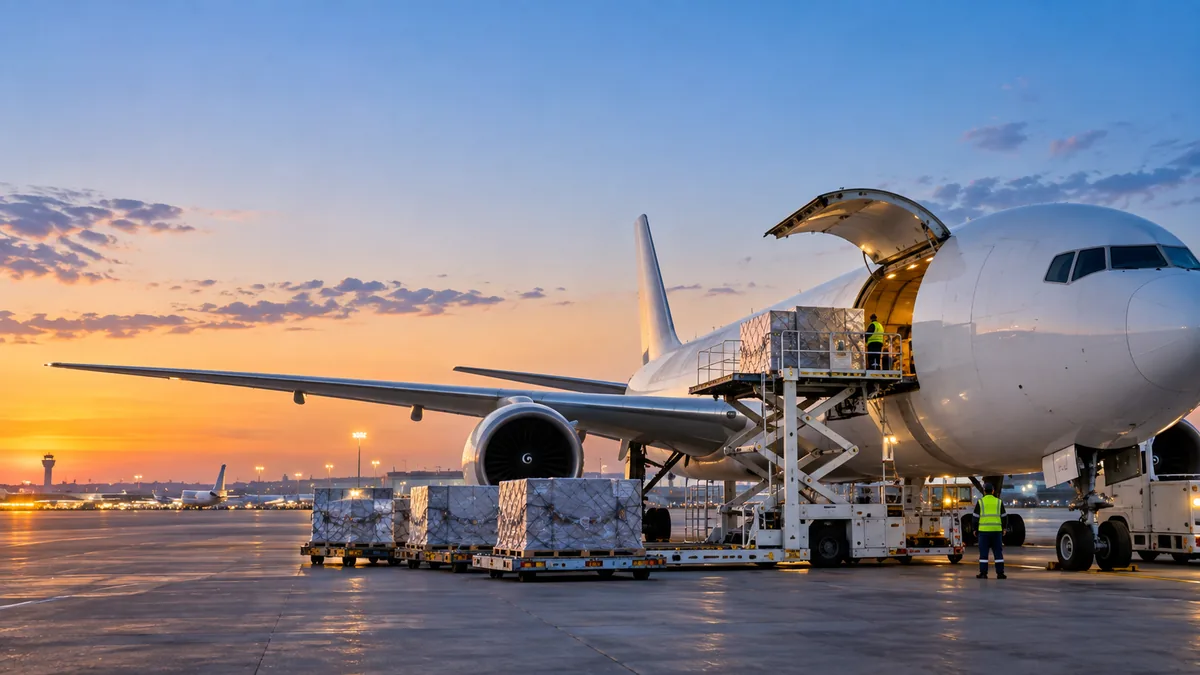
Cargo travels in the belly hold of a scheduled passenger flight. Capacity is sold by weight, and each aircraft type sets its own limit on the height, length and door opening a single piece can pass through.
Cargo travels on a dedicated freighter, an all-cargo aircraft. It takes the heavier, denser and outsized pieces a passenger belly hold cannot, sized against the door, length and height limits of the aircraft type.
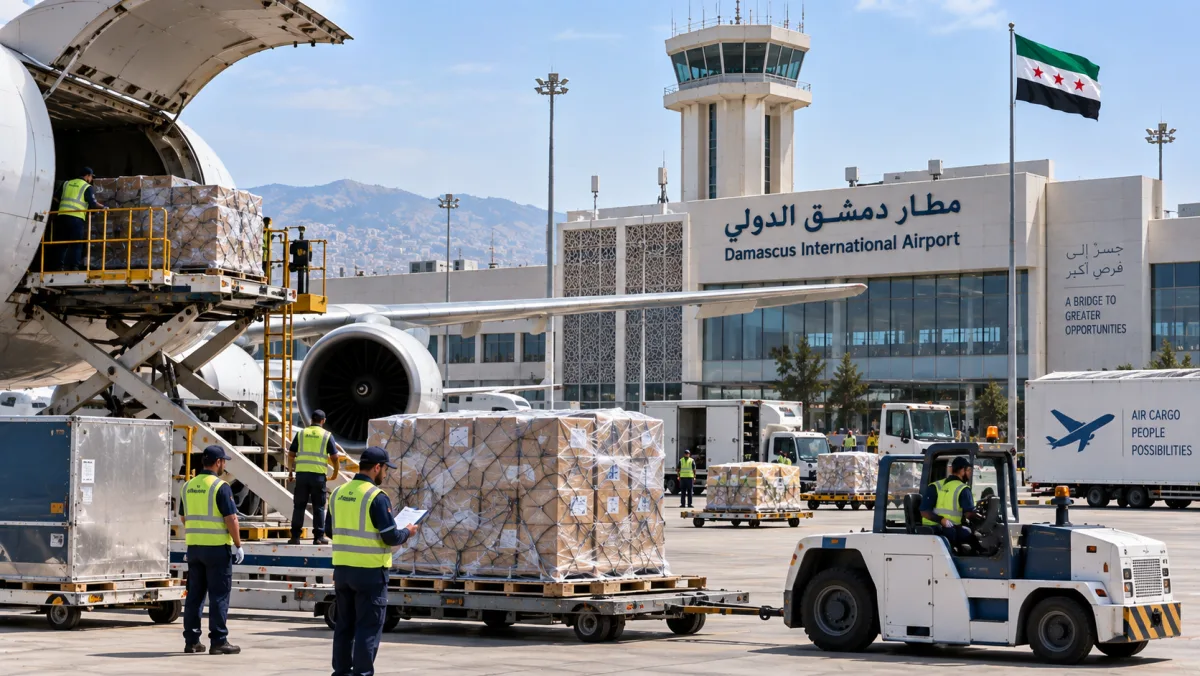
Mode comparison
When air freight is the right mode
Air freight is the right mode when the cost of the cargo standing still is greater than the cost of flying it: a stopped production line, a machine waiting on one part, a tender deadline, a short shelf-life product, or cargo whose value for each kilogramme makes the freight a small share of the invoice.
Air is charged on chargeable weight, so its cost rises with weight and with bulk together. Sea is charged per container or per cubic metre, so it rewards volume. We run the comparison on the real packing list and add the inventory and finance cost of the longer ocean transit to the ocean quote before putting the two figures side by side.
When only part of a consignment is urgent we split it. The critical pieces fly and the balance follows by sea or by road on the same commercial file.
- Cargo whose downtime cost exceeds the freight
- High value for each kilogramme
- Short shelf-life and deadline-bound goods
- Comparison run on the real packing list
- Split consignments across air and surface
Air pricing
Chargeable weight is the number that prices an air shipment
Chargeable weight in air freight is the greater of the actual gross weight of the consignment and its volumetric weight. The carrier charges the larger of the two figures and never the smaller.
The real weight of the packed consignment on the scale, every piece added together.
The space the consignment occupies, converted to a weight figure by the IATA divisor.
The airline charges the greater of the two — IATA converts volume at 6,000 cubic centimetres per kilogramme, so one cubic metre equals 166.67 kilogrammes. A light but bulky consignment is billed on its volume; a dense one on its gross weight.
Special handling
Temperature-controlled and priority air cargo

Temperature-controlled air cargo travels passively or actively. Passive means insulated boxes and pallet covers with phase-change or gel packs that hold a range for a defined period with no power. Active means a powered container that regulates its own temperature and records it. Both need the range agreed in writing before booking, and both need the ground time at every transit point planned, because the ramp and the warehouse are where temperature excursions happen, not the aircraft.
Priority handling books the consignment onto a named flight under the airline premium product and protects it from offload when the aircraft fills. Standard air cargo moves on a space-available basis, which is why a large consignment on a standard booking arrives split across flights.
General & commercial cargo
Commercial and industrial consignments moving to a fixed deadline, sold by weight.
Production spare parts
Spare parts flown when a stopped line or a waiting machine costs more than the freight.
Instruments & electronics
Instruments, electronics and controls that need speed and careful handling.
Pharmaceutical & temperature-controlled
Pharma and temperature-controlled goods carried passive or active on an agreed range.
Tooling, dies & samples
Tooling, dies and approval samples a project already on site is waiting on.
Priority & express
Booked onto a named flight under the airline premium product and protected from offload.
Valuable cargo
Carried under its own handling code, agreed with the airline before tender.
Fragile cargo
Carried under its own handling code, agreed in advance rather than found at the counter.
Oversized cargo
Checked against each aircraft type's height, length and door limits before booking.
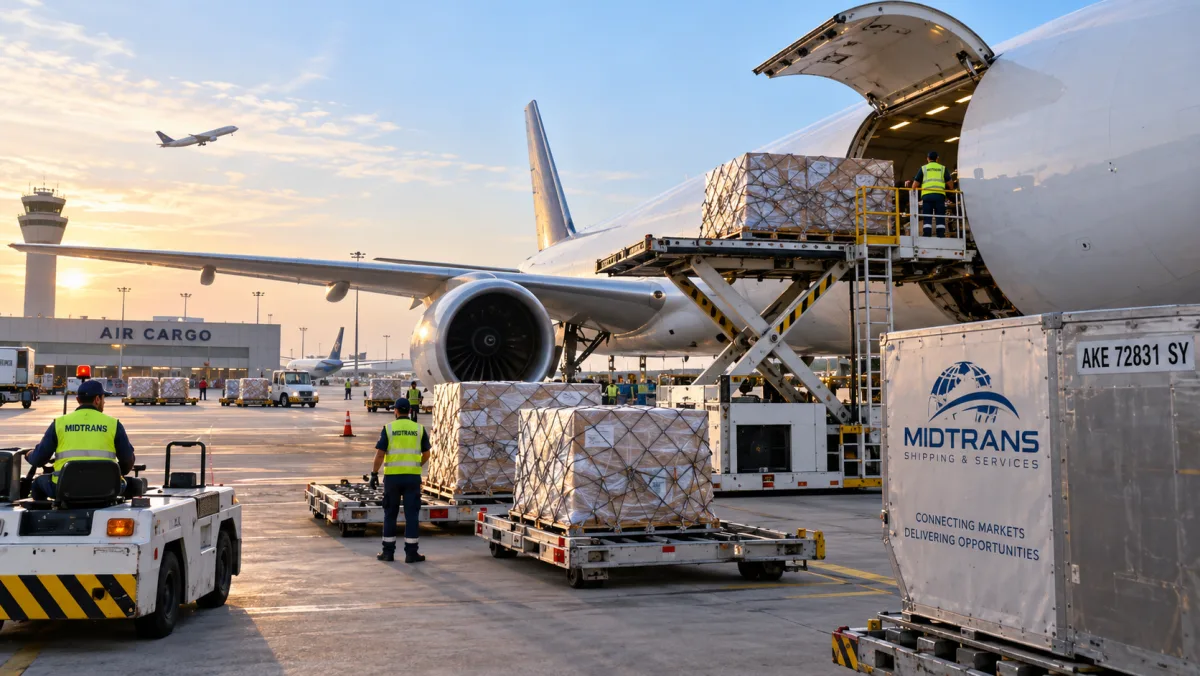
Airport handling
Acceptance, security screening and build-up
Cargo is tendered to the airline cargo terminal before the acceptance cut-off, which closes well ahead of departure. At acceptance the terminal weighs and measures every piece, checks marks and numbers against the air waybill, inspects the packing, and turns away anything that will not travel safely.
All air cargo is security screened before loading. Screening is carried out by X-ray, explosive trace detection, physical search or another approved method, or the cargo arrives already secure under a regulated agent and known consignor regime, in which case its security status travels forward on the air waybill instead of being established again.
Cargo is then built onto a unit load device. A ULD is the aluminium pallet with its net, or the contoured container shaped to fit an aircraft hold. On smaller aircraft the cargo is loaded loose instead. How well the build is done decides how much of the booked capacity the consignment actually consumes.
Dangerous goods follow the IATA Dangerous Goods Regulations, which govern classification, UN-specification packaging, marks and labels, and the shipper declaration that has to accompany the consignment before any airline accepts it.
- Tender before the acceptance cut-off
- Every piece weighed and measured at acceptance
- Security screening before loading
- Build-up onto a unit load device
- IATA Dangerous Goods Regulations for regulated cargo
Transport documents
The air waybill, the master and the house
An Air Waybill, abbreviated AWB, is the transport document for an air shipment. It is a receipt for the cargo, the contract of carriage between shipper and carrier, and the instruction sheet that follows the consignment through every handling point. Unlike a bill of lading it is neither negotiable nor a document of title, and the cargo is released to the consignee named on it.
A Master Air Waybill, abbreviated MAWB, is issued by the airline to whoever tenders the consignment, and for a consolidation that is the forwarder. A House Air Waybill, abbreviated HAWB, is issued by the forwarder to each individual shipper inside that consolidation. One MAWB therefore covers many HAWBs, and each shipper holds a document that names its own cargo alone.
The air waybill carries the shipper and consignee, the airports of departure and destination, the piece count, the gross and the chargeable weight, the nature and quantity of the goods, and the handling codes that tell every station how the cargo is to be treated.

- AWB is a receipt and a contract of carriage
- AWB is not a document of title
- MAWB issued by the airline to the forwarder
- HAWB issued by the forwarder to each shipper
- Handling codes travel on the document
Booking
What we need to quote air freight
Send the origin airport or pickup address, the destination airport or delivery address, the commodity, the piece count, the gross weight of each piece, the length, width and height of each piece, whether the goods are regulated or temperature-controlled, and the date the cargo is ready. From that we calculate the chargeable weight and quote against it.
- Origin airport or pickup address
- Destination airport or delivery address
- Gross weight of each piece
- Length, width and height of each piece
- Regulated or temperature-controlled status
- Cargo readiness date
FAQ
Frequently asked questions
Answers on chargeable weight, air waybills, screening and airport handling.
How is chargeable weight calculated in air freight?
Chargeable weight in air freight is the greater of the actual gross weight of the consignment and its volumetric weight. Volumetric weight is length multiplied by width multiplied by height in centimetres divided by 6,000, the general air cargo divisor published by IATA, which is the same ratio as one cubic metre equal to 166.67 kilogrammes.
What is the difference between a MAWB and a HAWB?
A Master Air Waybill (MAWB) is issued by the airline to whoever tenders the consignment, which for a consolidation is the forwarder. A House Air Waybill (HAWB) is issued by the forwarder to each individual shipper inside that consolidation, so one MAWB covers many HAWBs.
Is an air waybill a document of title?
No. An Air Waybill (AWB) is a receipt for the cargo and the contract of carriage, but it is neither negotiable nor a document of title. The cargo is released to the consignee named on it, which is the main documentary difference between air freight and sea freight.
Why is all air cargo screened before loading?
Air cargo is security screened by X-ray, explosive trace detection, physical search or another approved method before it is loaded. Cargo that arrives already secure under a regulated agent and known consignor regime carries its security status forward on the air waybill instead of being screened again.
What is a ULD in air freight?
A ULD, or unit load device, is the aluminium pallet with its net or the contoured container shaped to fit an aircraft hold. Cargo is built onto a ULD before loading, and how well the build is done decides how much of the booked capacity the consignment actually consumes.
When does air freight earn its cost against sea freight?
Air freight earns its cost when the cargo standing still costs more than flying it: a stopped production line, a machine waiting on one part, a short shelf-life product, or cargo whose value for each kilogramme makes the freight a small share of the invoice. We add the inventory and finance cost of the longer ocean transit to the ocean quote before putting the two figures side by side.
Next step
Discuss a shipment, customs question, or logistics requirement
Send the piece list with dimensions and we return the chargeable weight and the routing behind it.
Piece count, gross weight for each piece, and length, width and height at the greatest points.
Origin airport or pickup address, destination airport or delivery address, and the Incoterm.
Regulated, temperature-controlled or priority status agreed before the cargo is tendered.

International Shipping & Customs Assistant


