
Land Freight Services
Land Freight in Syria from Dubai and Jebel Ali
Land freight moves commercial and industrial cargo by truck from the loading bay to the consignee, crossing borders under transit procedure without handing the cargo to another mode. We arrange Full Truck Load (FTL) and Less than Truck Load (LTL) movements, match the trailer to the cargo, prepare the consignment note and transit paperwork each crossing calls for, and follow the vehicle through to unloading. This page explains the method: how a truck is sold, which trailer takes which cargo, what happens at a border, and when road may be more practical than sea on a regional lane.
FTL, LTL and groupageDubai and Jebel Ali truckingCross-border customs coordination
MIDTRANS operations deskShipment Information
Land freight forwarding from Dubai and Jebel Ali across GCC and Middle East road corridors

FTL and LTL: how a truck is sold
FTL takes the whole deck and travels sealed. LTL shares the deck and is charged on loading metres.
Trailer types and their cargo
Box, curtain-side, flatbed, low-bed, extendable, reefer and chassis, chosen from the cargo.

How a border crossing works
Export declaration, transit procedure, import declaration, and a seal that stays intact between them.
When road beats sea
One loading and one unloading, with no port handling added at either end of the lane.


International Shipping & Customs Assistant
MIDTRANS Operations Desk
Team review before pricing or operationsMode definition
What land freight is and what it carries
Land freight — also called road freight or overland transport — carries cargo by truck from an origin address to a destination address, across every border in between. Its defining property: the cargo is loaded once and unloaded once, with no port, no terminal transfer and no change of mode.
We move commercial and industrial consignments by road: raw materials, manufactured and finished goods, machinery and industrial equipment, construction and project materials, packaged production output, and vehicles carried as cargo.
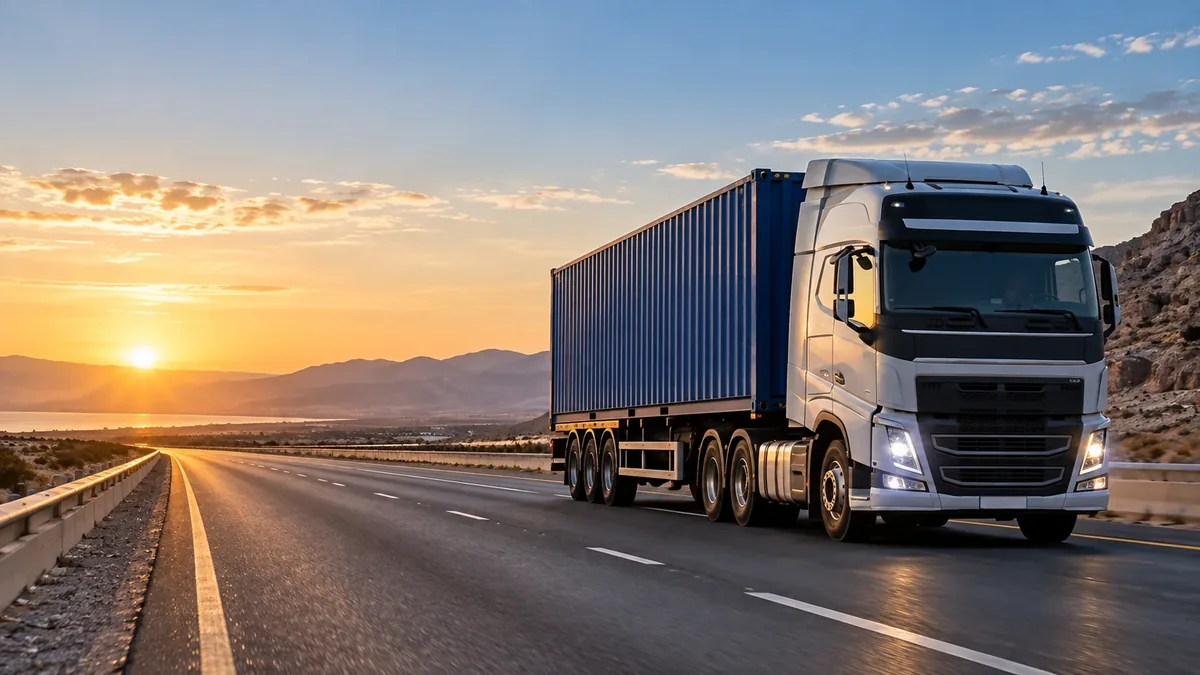
One consignment uses the whole vehicle. The trailer is loaded at one place, sealed, and driven to one place — nothing else rides on it and nothing is handled on the way. Best for full decks, sealed, fragile or high-value cargo.
Several consignments share one vehicle. Each pays for what it occupies, and cargo is handled at a groupage terminal where loads are combined outbound and separated inbound. Best for part loads.
How road freight is priced — on whichever is greater, the gross weight or the loading metre (LDM). One LDM is one metre of trailer floor along the length across the full loading width, so a light but unstackable pallet costs the same as a heavy one beside it.
Equipment & border
Trailer types, and how a crossing works
The trailer is chosen from the cargo, not the other way round — and the wrong choice is discovered at the loading bay, when it is already too late.
Weight and dimension limits are set by the road authority of every country the truck passes through, and the lowest limit anywhere on the route governs the whole movement.
Box / dry van
Enclosed, locked deck for general palletised and cartoned cargo that must stay dry.
Curtain-side
Sliding fabric sides so a forklift can load from the side when rear loading is impractical.
Flatbed
Open deck, crane or side-loaded — steel, pipe, crated plant and over-width pieces.
Low-bed / low-loader
Dropped deck lowers load height for tall or heavy tracked and wheeled machinery.
Extendable
Telescopes for pipes, beams, blades and other long single pieces.
Refrigerated
Carries its own cooling unit and holds an agreed set temperature.
Tanker
Bulk liquids in a framed or barrel tank.
Car carrier
Moves vehicles as cargo on multiple decks.
Skeletal chassis
Carries a sea container port-to-consignee without unstuffing it.
How a cross-border truck movement works
Export declaration
Lodged in the country where the cargo is loaded.
Transit procedure
Covers the cargo while it crosses countries where it is neither imported nor exported. The vehicle travels sealed; the seal number is recorded and checked at each control point.
Import declaration
Lodged in the country of delivery. The CMR consignment note, signed at handover, is the evidence of what was received and in what state.
Papers that ride with the driver
- CMR consignment note
- Commercial invoice & packing list
- Certificate of origin
- Transit declaration
- Manifest
- Vehicle & driver documents
Load handling
What happens to the cargo on the deck
Load security is the difference between arriving and arriving damaged. Cargo is positioned so that axle loads stay legal, blocked so that it cannot run forward under braking, and lashed with straps or chains rated for the weight they hold.
For groupage we build the deck in delivery order, so the first consignment off stands nearest the doors, and we keep apart consignments that must not travel in contact with one another.
Abnormal loads, meaning cargo over the legal width, height, length or weight, need a permit for each country, a route survey that confirms bridge, gantry and roundabout clearance, and escort vehicles for the sections that call for them.
- Axle loads kept inside the legal limit
- Blocking against forward movement under braking
- Lashing rated for the weight carried
- Groupage decks built in delivery order
- Permits and route surveys for abnormal loads
Mode comparison
When road beats sea and air on a regional lane
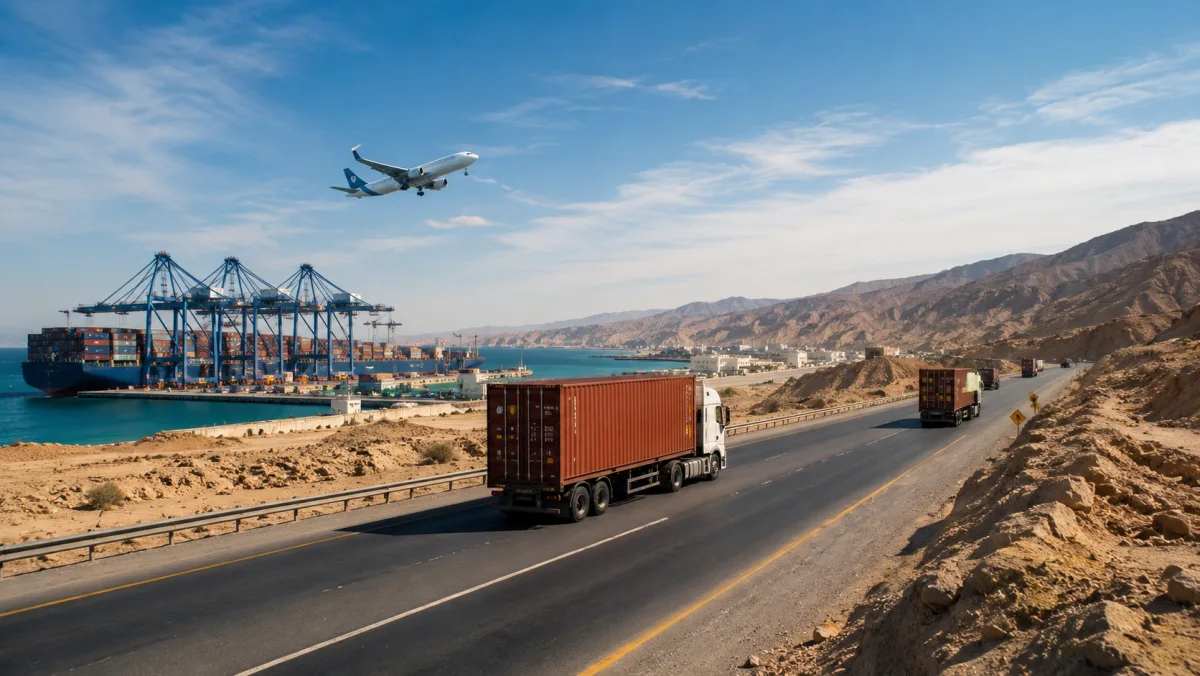
Road wins on lanes where origin and destination sit on the same landmass and a port would add handling rather than remove it. A truck loads at the supplier bay and unloads at the consignee. A sea movement over the same distance adds haulage to the port, terminal handling, vessel time, discharge, terminal handling again and haulage out at the far end.
Road also wins when the destination is inland with no seaport near it, when the consignment is one full truck rather than one full container, and when a sealed vehicle from end to end suits the cargo profile.
Sea wins when the volume is large enough that containers cost less for each cubic metre than deck space, and wherever the route crosses water. Air wins when the delivery date rather than the freight cost decides the mode. When cargo arrives at a seaport and continues inland, we run the container out on a chassis or unstuff it and reload onto a trailer.
- Single loading and single unloading
- Inland destinations with no seaport nearby
- One full truck rather than one full container
- Sea for ocean crossings and large volume
- Air when the date rather than the cost decides
Booking
What we need to quote a road movement
Send the pickup address, the delivery address, the commodity, the number and type of packages, the gross weight, the outside dimensions of the biggest piece, whether the cargo is stackable, whether it needs temperature control, and the date it is ready. From that we choose the trailer, size the movement as FTL or LTL, and price it.
- Pickup and delivery addresses
- Commodity, packages and gross weight
- Outside dimensions of the biggest piece
- Stackability and temperature requirement
- Cargo readiness date
FAQ
Frequently asked questions
Answers on truckload types, trailers, loading metres and border documentation.
What is the difference between FTL and LTL?
Full Truck Load (FTL) means one consignment uses the vehicle capacity for one shipment, which is loaded at one place, sealed and driven to one place with limited handling on the way. Less than Truck Load (LTL), also called groupage, means several consignments share one vehicle, each paying for what it occupies, with the loads combined and separated at a groupage terminal.
What is a loading metre in road freight?
A loading metre (LDM) is one metre of trailer floor measured along the length across the full loading width. It measures the floor a consignment blocks whether or not anything else can be stacked on top of it, and road freight is charged on whichever is greater, the gross weight or the loading metres occupied.
What is a CMR consignment note?
A CMR consignment note is the standard road transport document under the Convention on the Contract for the International Carriage of Goods by Road. It records the sender, the carrier, the consignee, the goods and their condition at loading, and it is signed at handover, which makes it the evidence of what was received and in what state.
How many customs steps does a cross-border truck movement have?
Three. An export declaration is lodged in the country where the cargo is loaded, a transit procedure covers the countries the cargo crosses without being imported or exported, and an import declaration is lodged in the country of delivery. Between those events the vehicle travels sealed.
Which trailer is used for heavy machinery?
A low-bed or low-loader trailer. Its dropped deck lowers the load height so that tall or heavy plant clears bridges and gantries, which makes it the standard equipment for tracked and wheeled machinery. Cargo wider or longer than an enclosed body goes on a flatbed or an extendable trailer instead.
When is road freight better than sea freight?
Road freight is better when origin and destination sit on the same landmass and a port would add handling rather than remove it. A truck loads at the supplier bay and unloads at the consignee, while a sea movement over the same distance adds haulage to the port, terminal handling, vessel time, discharge, terminal handling again and haulage out at the far end.
Next step
Discuss a shipment, customs question, or logistics requirement
Send the addresses and the load profile and we return the trailer, the load type and the border paperwork.
Packages, gross weight, dimensions of the biggest piece, and whether the cargo stacks.
Pickup address, delivery address, and every country the vehicle passes through.
Consignment note, transit declaration and the seal that stays intact between borders.


