
Photo gallery
Project cargo, in photographs
Project cargo is easier to understand from a picture than a description. These photographs are of shipments handled by MIDTRANS. They show pressure vessels, process columns, fabricated sections and modules being lifted, bedded, lashed, moved by road and stowed aboard ship.
Global CoverageCompetitive RatesEnd-to-End Support
MIDTRANS operations deskShipment Information
Project cargo is easier to understand from a picture than a description. These photographs are of shipments handled by MIDTRANS.

Lifting plan
Every piece in these photographs needed a lifting plan before it moved.

Route survey
The route had to physically take the piece, from origin to the berth.

Bedding and lashing
Timber bedding cut to the piece, then lashing for the voyage.

Road move and stowage
Moved by road, then stowed aboard the vessel. Send us the piece and we plan it.



International Shipping & Customs Assistant
MIDTRANS Operations Desk
Team review before pricing or operationsWhat these photographs show
Each item here needed a lifting plan, a route that could physically take it, timber bedding cut to the shape of the load, and lashing checked before the vehicle moved. That preparation is most of the work on a project cargo shipment, and it is what the pictures are really showing.
Project cargo moved by MIDTRANS. Select any photograph to open it at full size.
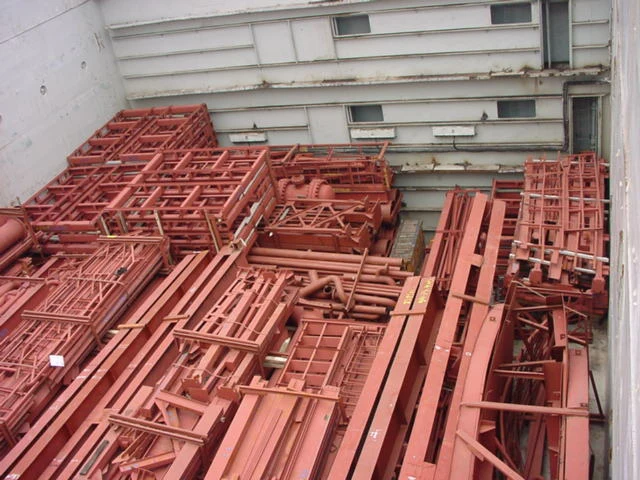
Steel structures stacked and separated in the hold, ready for lashing. 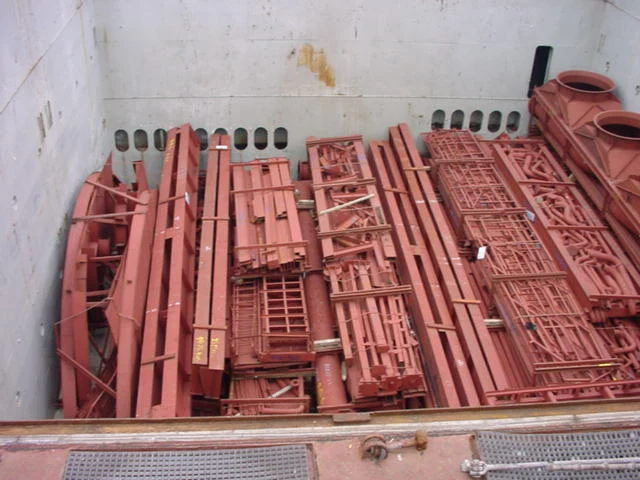
Fabricated steel sections stowed in a ship's hold as breakbulk cargo. 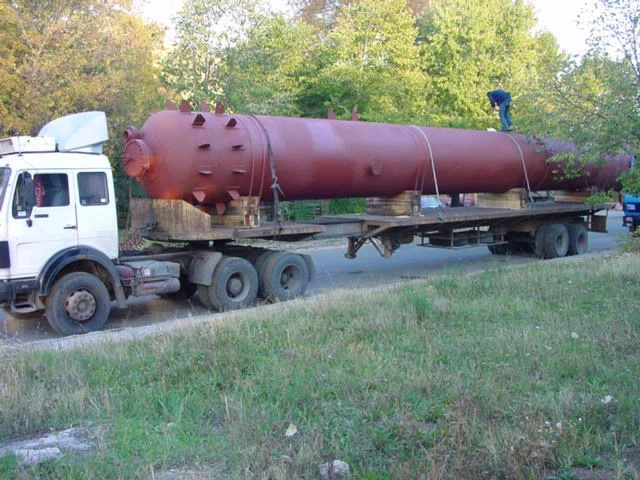
A column loaded on a flatbed at the roadside, a worker securing it at the far end. 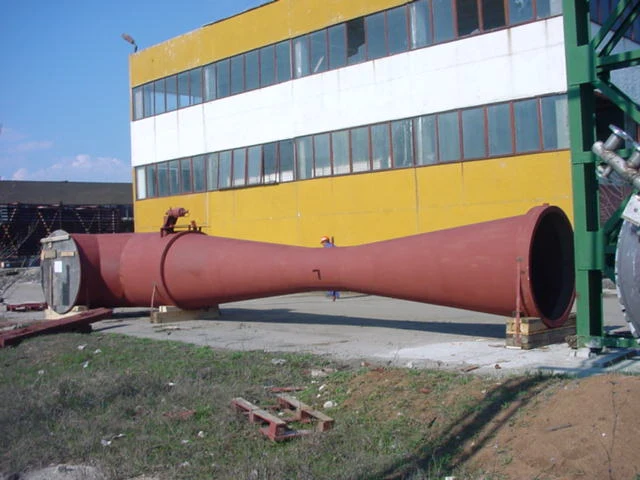
A cone-shaped transition section resting on blocks in the fabrication yard. 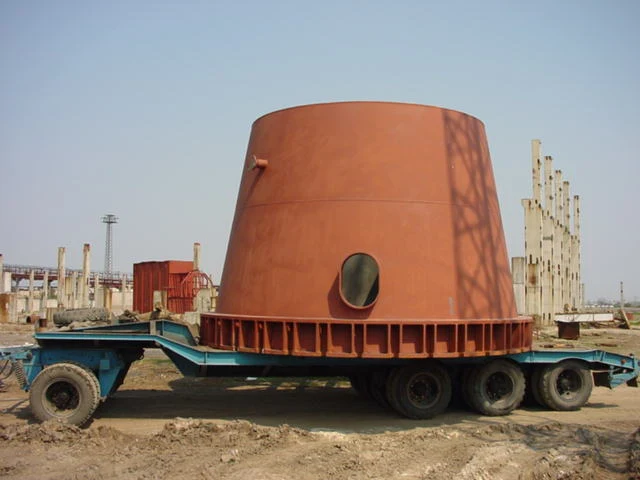
A cone-shaped vessel on a low-bed trailer at a construction site. 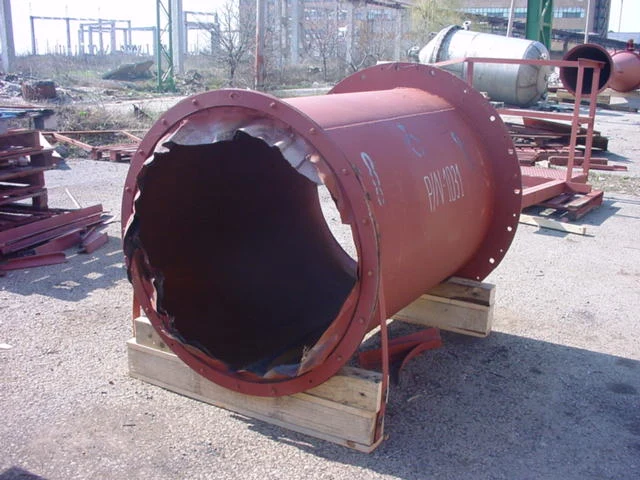
A flanged cylindrical section on timber blocks, its open end facing the camera. 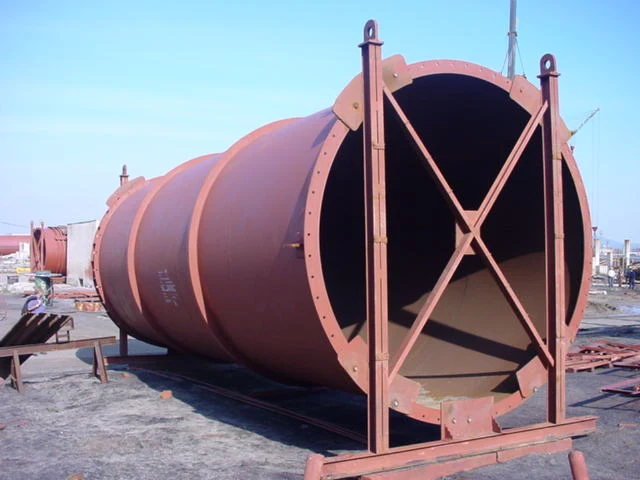
A cylindrical fabricated section braced in a steel transport frame, standing in the yard. 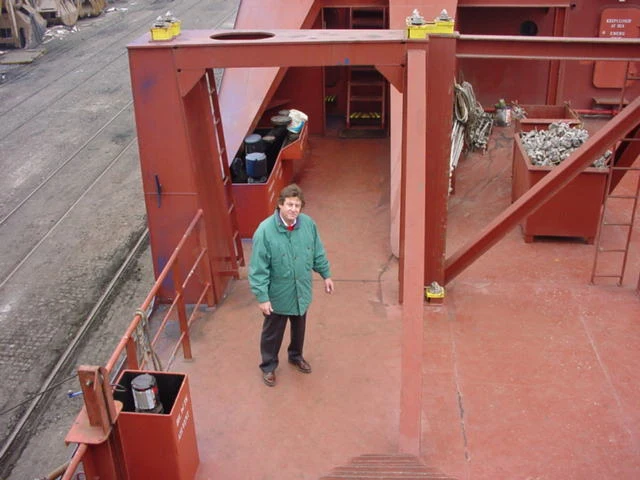
Lashing gear and securing equipment laid out on deck before loading. 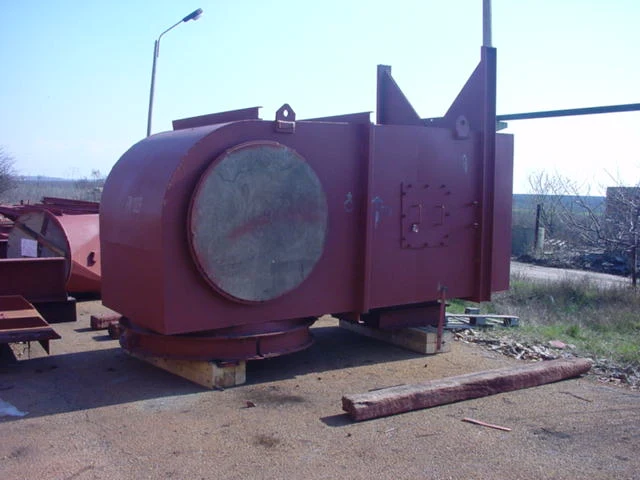
A fabricated equipment module with a large circular cover, standing on blocks in the yard. 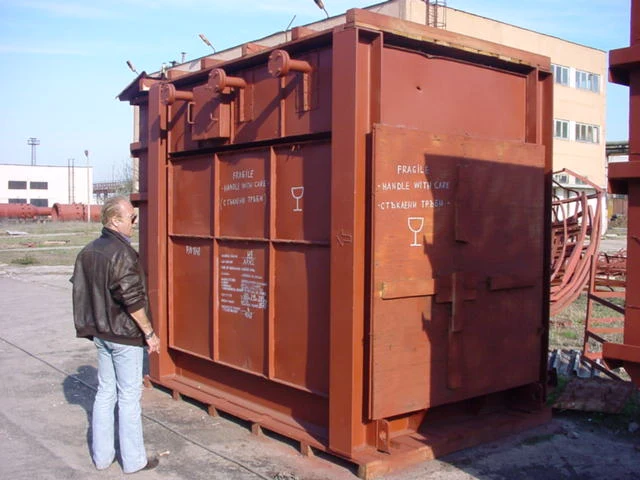
A heavy industrial crate stencilled FRAGILE — HANDLE WITH CARE, ready for handling. 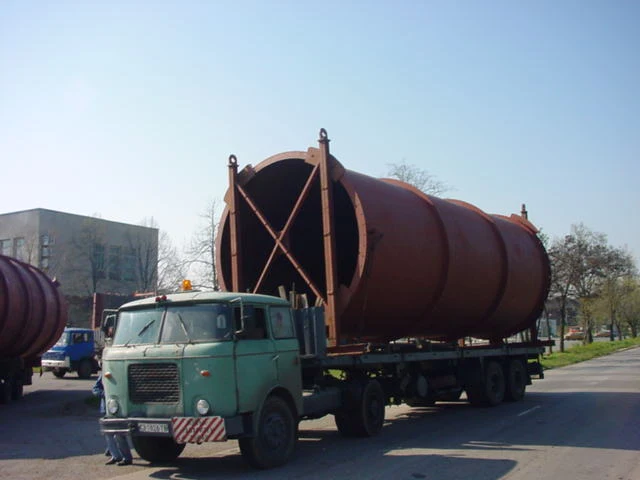
A braced cylindrical section on a flatbed truck, moving out of the yard. 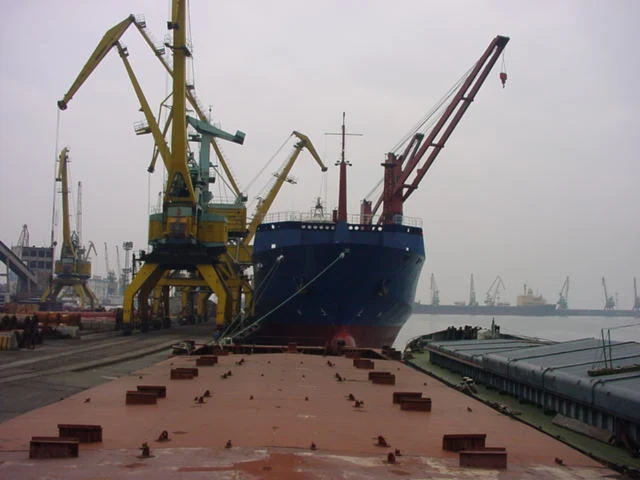
A general cargo vessel at berth, seen from the deck of the ship alongside. 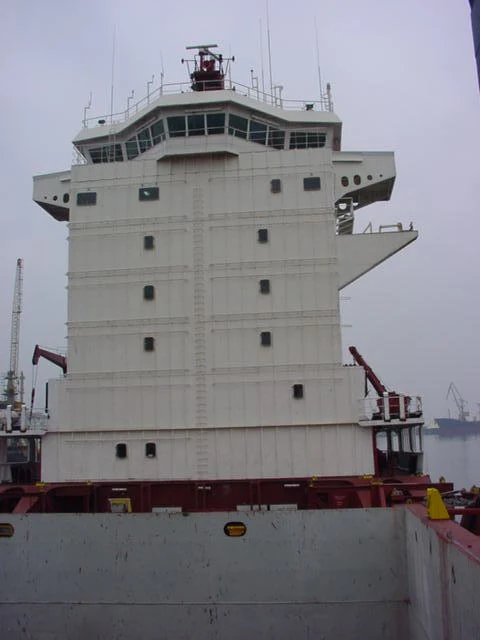
The superstructure of a general cargo vessel at berth. 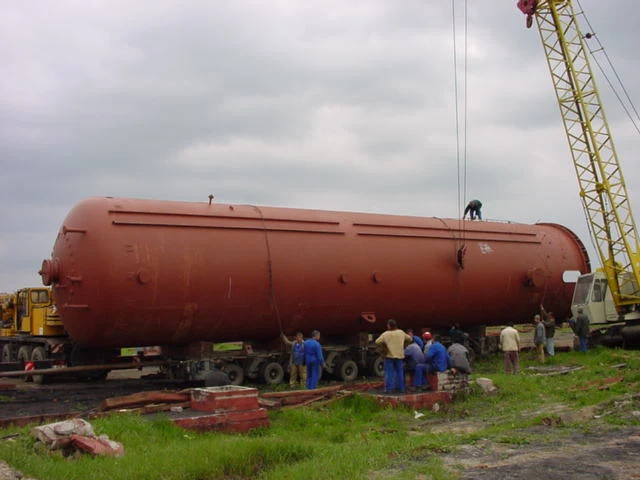
A crew working around a large vessel on its transporter, crane rigged above. 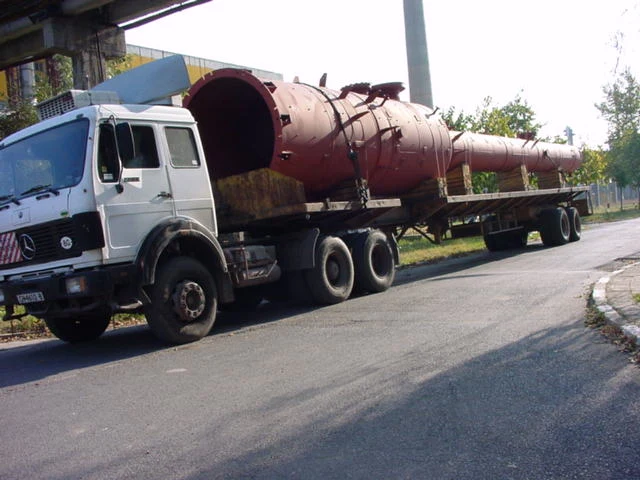
A large vessel on a multi-axle modular transporter; the people alongside give the scale. 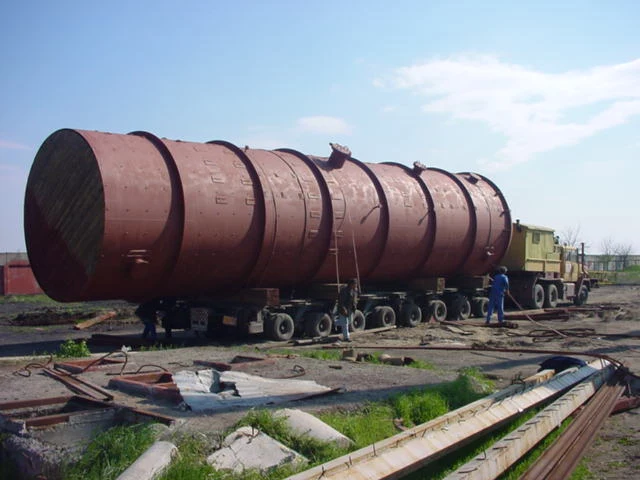
A large vessel on a modular transporter, its open end toward the camera. 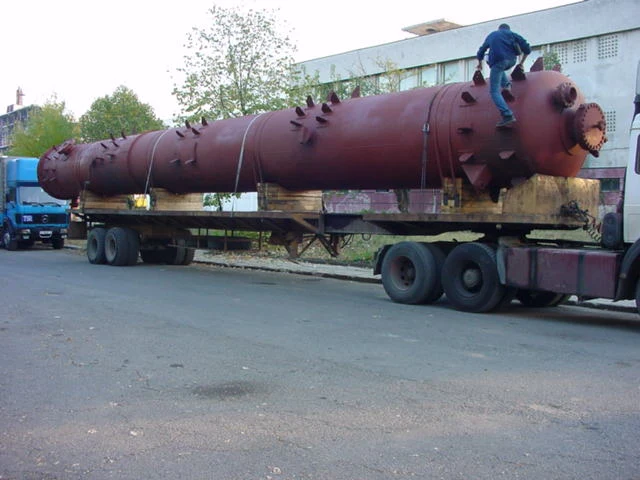
A column with welded nozzles on a flatbed, a worker checking the load on top. 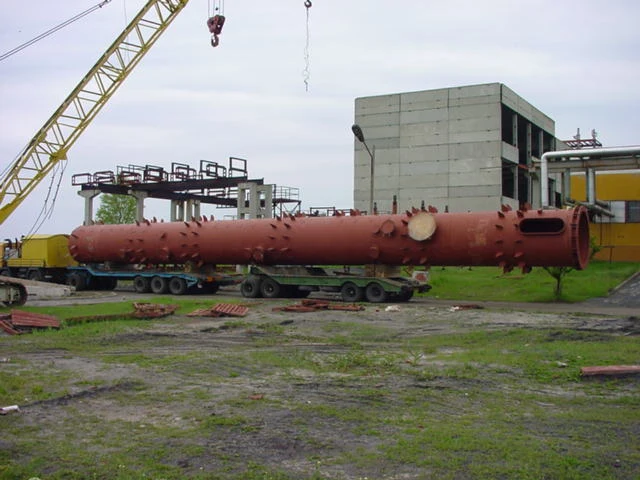
A long nozzled column on a trailer inside an industrial plant, crane standing by. 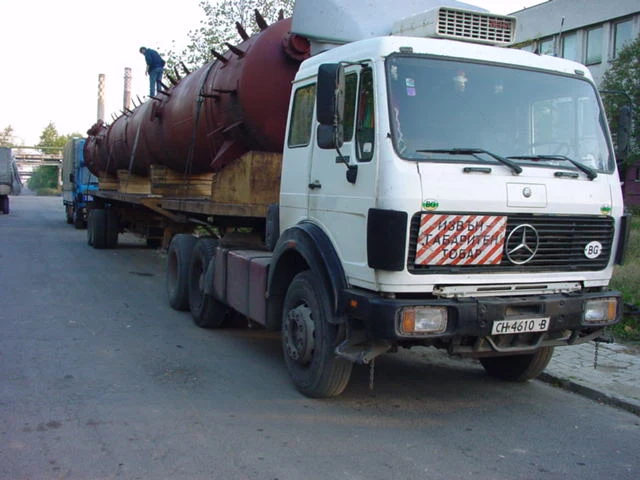
The tractor unit of an oversized-load convoy, warning board fitted, vessels loaded behind. 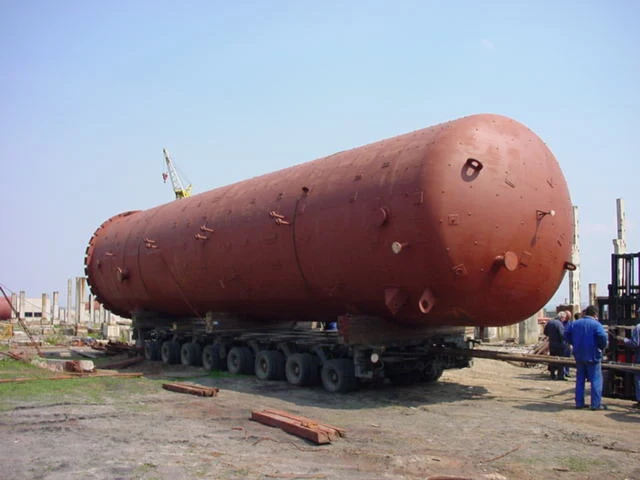
A large pressure vessel being positioned on a multi-axle transporter in the yard. 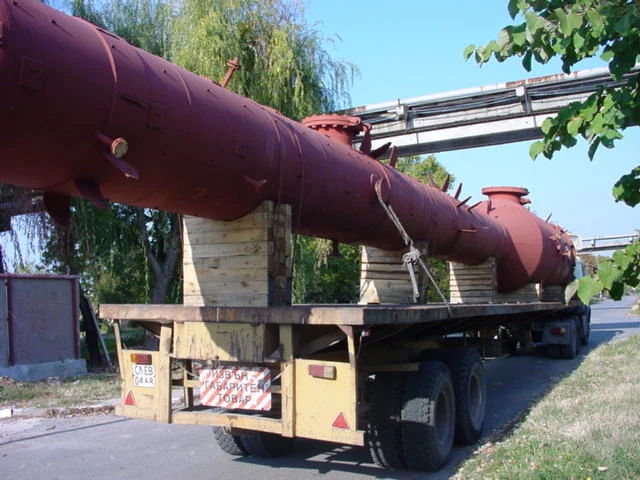
A process column on an extendable trailer, bedded on cut timber and signed as an oversized load. 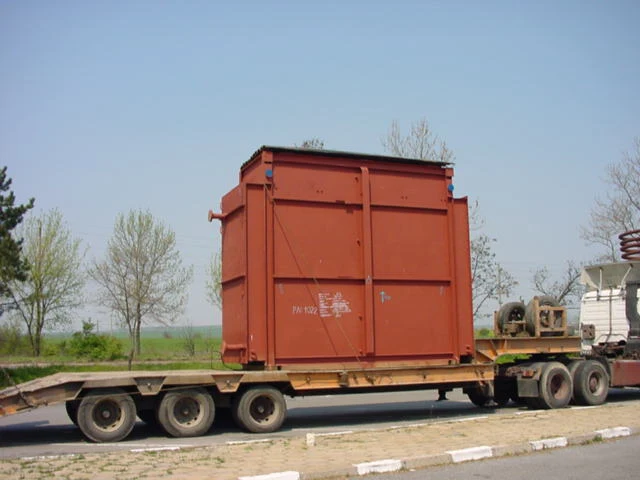
A rectangular fabricated module loaded on a low-bed trailer. 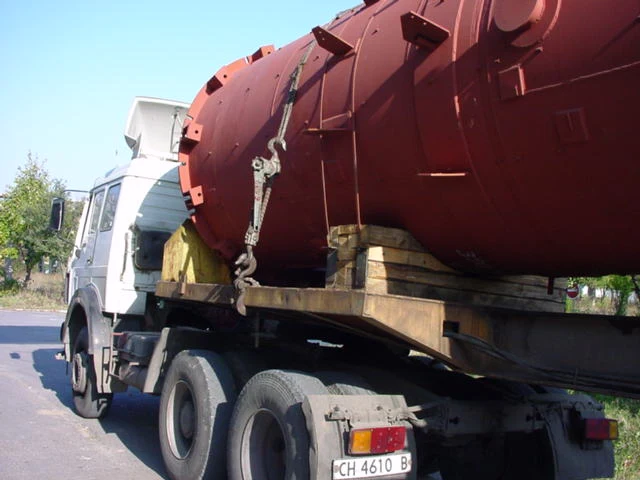
Close-up of the chain lashing and timber bedding holding a vessel on its trailer. 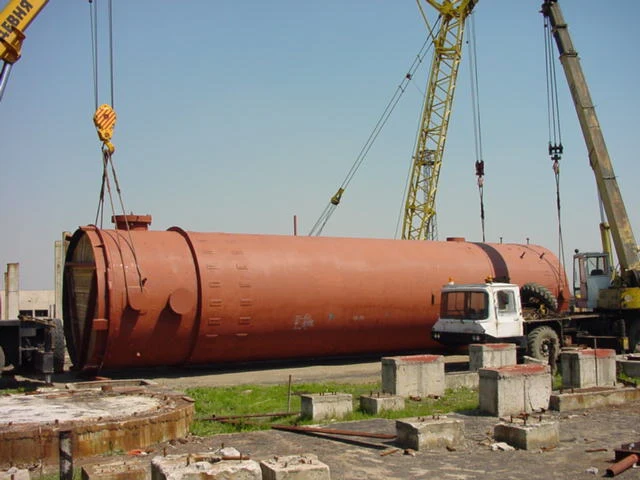
Cranes setting a vessel down onto prepared supports in the yard. 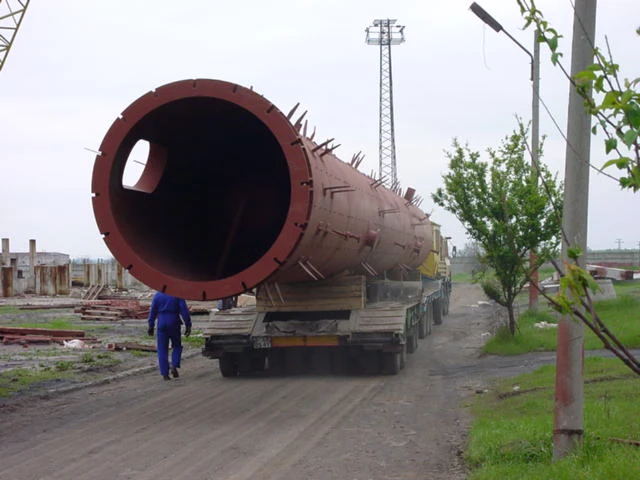
A vessel leaving the yard on its transporter, open end toward the camera. 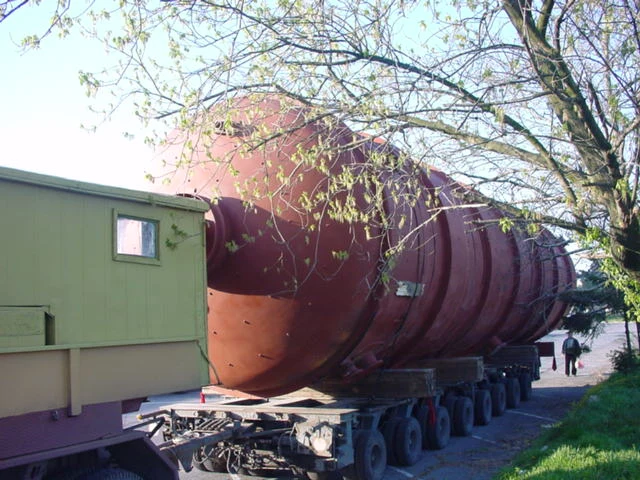
A vessel on a modular transporter passing a tight, tree-lined stretch. 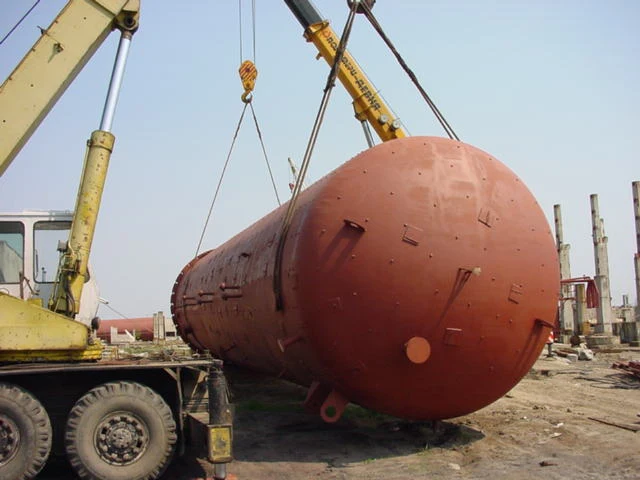
A vessel lifted clear of the ground by two cranes working together. 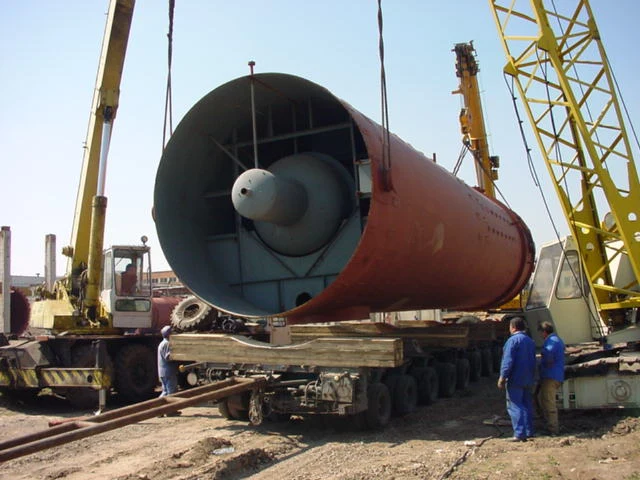
A vessel with its internal assembly visible, handled by two cranes over a modular transporter.
FAQ
Frequently asked questions
Clear answers for customers reviewing MIDTRANS services, routes, documents, and official support channels.
What kind of cargo is shown in this gallery?
Mainly project cargo: pressure vessels, process columns, conical and cylindrical fabricated sections, and rectangular modules, together with breakbulk steel stowed in ships' holds.
Does MIDTRANS handle loads that need a modular transporter?
Several photographs show self-propelled modular transporters, which are used when a load is beyond what a standard trailer can carry. Whether a particular consignment needs one depends on its weight, dimensions and route, and is assessed case by case.
Can I ask about a shipment similar to one in these photographs?
Yes. Share the cargo description, dimensions, weight, origin and destination, and the MIDTRANS team can review what the movement would involve. Nothing is priced or committed from a photograph.
Are transit times or costs shown anywhere in this gallery?
No. These are photographs of handling and transport work. Timings and costs depend on the specific cargo, route, permits and operating conditions, and are only discussed after the team reviews the details.
Why are the loads bedded on timber and chained down?
Timber bedding is cut to the shape of each piece so it sits evenly on the trailer deck or in the hold, and the chain lashing is checked against it before the vehicle moves. Several photographs show the bedding and the lashing close up.
Does the gallery show sea moves as well as road moves?
Yes. Alongside low-bed trailers, extendable trailers and modular transporters, the photographs show fabricated steel stowed as breakbulk in a ship's hold, lashing gear laid out on deck and general cargo vessels at berth.
Next step
Discuss a shipment, customs question, or logistics requirement
Share the route, cargo, documents, and timing once. MIDTRANS can review the same structured request through WhatsApp, email, or the contact desk.
Origin, destination, pickup point, delivery point, and preferred freight mode.
Commodity, weight, volume, documents, readiness date, and customs questions.
Operations follow up through official MIDTRANS channels before any commitment.


