
Sea freight forwarder Dubai
Sea Freight in Syria from Dubai and Jebel Ali to Global Markets
Sea freight moves commercial and industrial cargo in containers or as breakbulk on scheduled vessel services between seaports. We book Full Container Load (FCL) and Less than Container Load (LCL) space, stuff and seal containers at origin, and follow the box through terminal handling, vessel loading, discharge and release. This page explains the method: how the loading mode is chosen, which container type takes which cargo, how ocean freight is measured, and which transport document is issued.
FCL and LCL shippingContainer shipping DubaiProject sea freight
MIDTRANS operations deskShipment Information
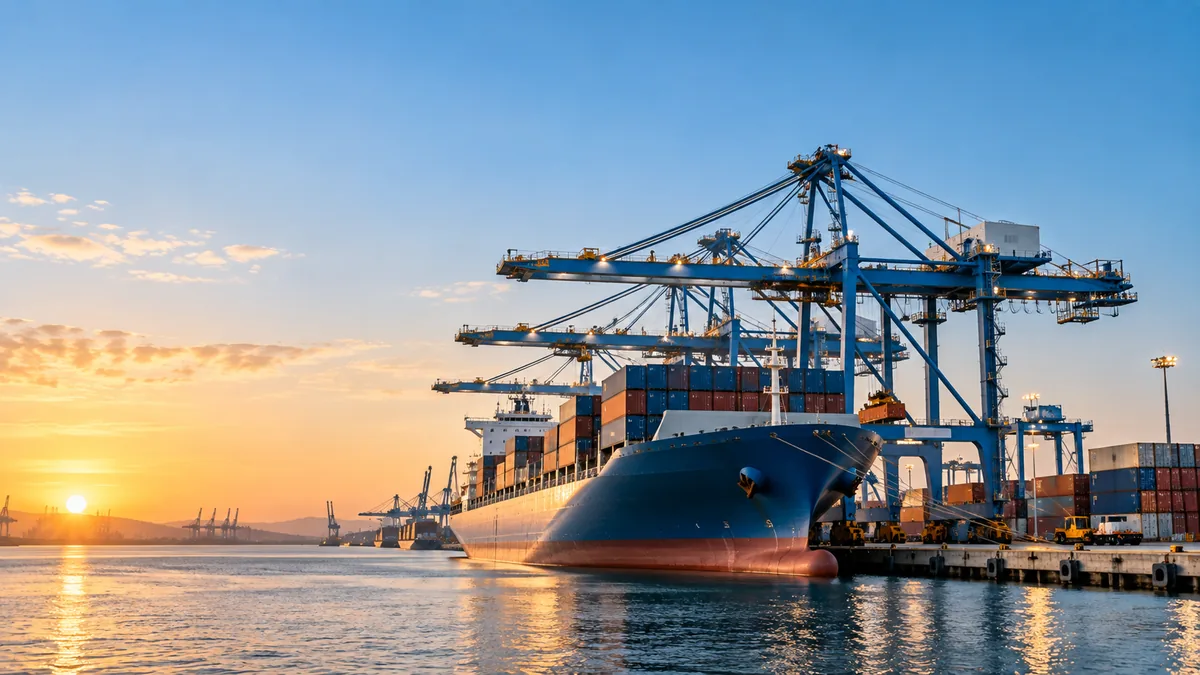
Container vessel, terminal crane, and freight truck representing sea freight coordination

FCL and LCL loading modes
FCL buys a whole container for one consignment. LCL buys space by the cubic metre inside a shared box.

Container equipment selection
Dry van, high cube, open top, flat rack, reefer and ISO tank, matched to the cargo each one takes.
Consolidation and cross-stuffing
We group compatible consignments into one box and transfer cargo container to container without storage.

Bill of lading and release
Original, surrender and telex release each control the cargo differently at destination.


International Shipping & Customs Assistant
MIDTRANS Operations Desk
Team review before pricing or operationsMode definition
What sea freight is and what it carries
Sea freight is the carriage of cargo by ocean vessel between seaports, sold either as a whole container or as space inside a container shared with other consignments. It is the lowest-cost mode for each unit of volume moved, which is why it carries the bulk of international trade.
We move commercial and industrial consignments this way: raw materials, manufactured and finished goods, machinery and industrial equipment, spare parts, packaged production output, and project and heavy cargo that no aircraft and no single trailer can take.
One shipper books an entire container and pays for the box whether or not it is full. We load FCL when the cargo fills or nearly fills a box, when it must not be handled at a consolidation warehouse, when it is fragile, high-value or contamination-sensitive, and when the seal must stay unbroken from the shipper floor to the consignee door.
The shipper buys space inside a container shared with other consignments and pays for the volume and weight it actually occupies. We load LCL when the consignment is too small to justify a whole box, when a buyer collects from several suppliers, and when goods finish production on different dates and cannot wait for a full load.
How the two are priced — FCL is charged per container, full or not; LCL is charged on the cubic metres (CBM) and tonnes it actually occupies. The point where they cross over is a volume threshold calculated on the real packing list, not a rule of thumb: below it the shared box is cheaper, above it the whole box costs less than the same space bought by the cubic metre.
Container equipment
Container types and what each one carries
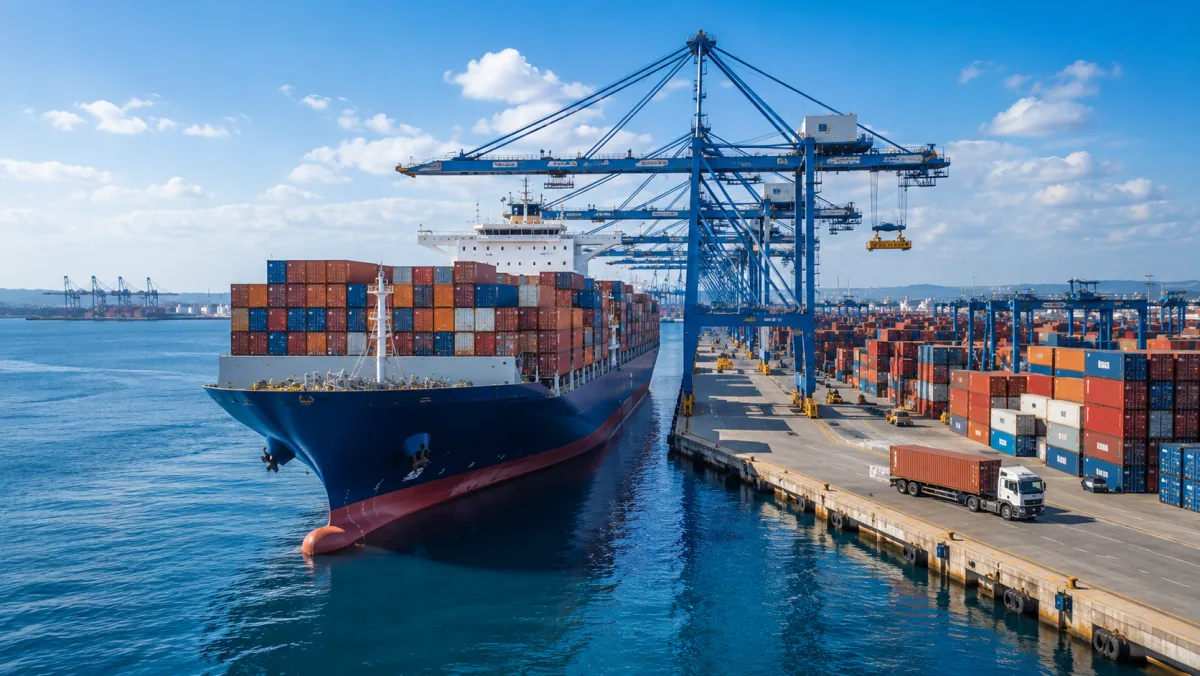
A shipping container is a steel box built to ISO dimensions so that it fits every vessel, crane, chassis and terminal in the world. Length is quoted in feet: the 20 ft and the 40 ft boxes are the two standard lengths, and the 40 ft high cube is the taller variant of the same footprint.
Payload is set by the plate on the container itself and by the road weight limit at each end of the journey, so we fix the equipment before the booking rather than after it.
Dry van
The default box for palletised, cartoned, drummed and crated cargo that must stay dry.
20 ft / 40 ft
The two standard lengths, built to ISO dimensions to fit every vessel, crane, chassis and terminal.
40 ft high cube
The same footprint with extra internal height; it earns its place when volume, not weight, fills the box.
Open top
A tarpaulin instead of a hard roof, so a crane loads from above what will not pass through the doors.
Flat rack
No sides and no roof; takes cargo wider or taller than a closed box.
Reefer
Insulated and machine-cooled, holding an agreed temperature for temperature-controlled cargo.
ISO tank
A framed tank for bulk liquids.
Non-containerised cargo
Breakbulk, out-of-gauge and heavy-lift ocean cargo
Breakbulk is cargo loaded into the hold of the vessel as individual pieces rather than inside a container: crates, bundles, steel coils, structural sections and machinery on skids. Out-of-gauge cargo sits on a flat rack or an open top but overhangs it in width, height or length. Heavy-lift is cargo whose weight puts it beyond standard container gear.
These moves are engineered rather than simply booked. We produce a lifting and stowage plan, work from the lifting points and the centre of gravity given by the manufacturer, agree the gear with the terminal, and confirm road and crane access at both ends before the piece leaves the factory.
- Crates, coils, bundles and structural steel
- Flat rack and open top overhang cases
- Lifting and stowage plan per piece
- Terminal gear agreed in advance
- Access confirmed at both ends
Chargeable volume
How ocean freight is measured and charged
Ocean LCL freight is charged on a weight-or-measurement basis, written W/M. The carrier charges whichever is greater, the gross weight in metric tonnes or the volume in cubic metres, and the greater of the two is called the revenue ton or freight ton.
CBM stands for cubic metre. One CBM is the volume of a cube one metre on each side. It is calculated from the outside dimensions of the packed piece, pallet included, and not from the dimensions of the product inside: length in metres multiplied by width in metres multiplied by height in metres gives the CBM of each piece, and the pieces are added together to give the consignment.
This is why a pallet of foam and a pallet of steel of identical size cost different amounts to move. The foam pays on its volume, the steel pays on its weight.
FCL is charged per container instead, so the cost of each cubic metre falls as the box fills. Terminal handling, documentation and haulage are charged per container as well, regardless of what is inside it.
- Weight or measurement, whichever is greater
- Revenue ton is the greater figure
- CBM taken from outside packed dimensions
- Pallet included in the measurement
- FCL charged per box, not per cubic metre
Port handling
What happens to the container inside the port
At origin the loaded container is delivered to the terminal before the port cut-off, accepted at the gate against the booking, and stacked in the yard until the vessel loads. At destination it is discharged, moved to the yard, and held there until the transport document is released and the import formalities are complete.
Terminal handling charges, quay rent, demurrage and detention are billed separately from ocean freight by the terminal and the carrier. Demurrage is charged when a container stays inside the terminal beyond the agreed free days. Detention is charged when the container stays outside the terminal, at the consignee premises, beyond the agreed free days.
Free days run from discharge, so the clock on a container starts before anyone has looked at the paperwork.
- Gate acceptance before the port cut-off
- Yard stacking until vessel loading
- Discharge, yard and document release
- Demurrage inside the terminal
- Detention outside the terminal
Documentation
The bill of lading and how the cargo is released
A bill of lading, abbreviated B/L, is the transport document issued by the ocean carrier. It does three things at once: it is a receipt for the cargo as loaded, it is evidence of the contract of carriage, and, when it is issued to order, it is a document of title, so whoever holds the original controls the cargo.
Release follows the form the bill takes. An original bill of lading is printed and couriered, and the consignee surrenders an original at destination to take delivery. A surrender or telex release is a bill the shipper hands back to the carrier at origin, after which the carrier authorises release at destination without paper travelling. A sea waybill is not a document of title and releases to the named consignee on identification alone.
Alongside the bill we prepare and check the commercial invoice, the packing list, the certificate of origin and the cargo manifest that the destination calls for.
- Receipt, contract and title in one document
- Original bill surrendered at destination
- Telex and surrender release without paper
- Sea waybill releases to the named consignee
- Invoice, packing list and certificate of origin
Mode comparison
When sea freight is the right mode
Sea freight is the right mode when the volume is large, the cargo is dense or bulky, and the delivery date sits weeks rather than days ahead. It carries what no aircraft can take, from full production lines and transformers to tanks and structural steel, and it carries ordinary commercial volume at the lowest cost for each cubic metre of any mode.
Air freight beats sea when the value or the urgency of the cargo outweighs the freight cost. Land freight beats sea on regional lanes where a truck drives from the loading bay to the consignee with no port at either end. When cargo crosses an ocean and then a border, we combine the two and the container continues inland by road.
- Large volume and dense cargo
- Delivery date set weeks ahead
- Cargo beyond aircraft and trailer limits
- Lowest cost for each cubic metre
- Sea and road combined on inland legs
Booking
What we need to book ocean space
Send the loading port or pickup address, the discharge port or delivery address, the commodity, the number and type of packages, the gross weight, the outside dimensions of each package, the Incoterm and the date the cargo is ready. With that we check equipment availability, price the container and the cubic metre side by side, and open the booking.
- Loading port or pickup address
- Discharge port or delivery address
- Commodity, packages and gross weight
- Outside dimensions of each package
- Incoterm and cargo readiness date
FAQ
Frequently asked questions
Answers on containers, consolidation, ocean measurement and shipping documents.
How do FCL and LCL differ in what the shipper pays for?
Full Container Load (FCL) means one shipper books an entire container and pays for the box whether or not it is full. Less than Container Load (LCL) means the shipper buys space inside a container shared with other consignments and pays for the volume and weight it actually occupies.
How is LCL sea freight charged?
LCL is charged on a weight-or-measurement basis: the carrier charges whichever is greater, the gross weight in metric tonnes or the volume in cubic metres. The greater of the two figures is called the revenue ton or freight ton.
What is a CBM in sea freight?
CBM stands for cubic metre. One CBM is the volume of a cube one metre on each side, and it is calculated from the outside dimensions of the packed piece including the pallet, not from the dimensions of the product inside.
What does a bill of lading do?
A bill of lading (B/L) is a receipt for the cargo as loaded, evidence of the contract of carriage, and, when it is issued to order, a document of title, so whoever holds the original controls the cargo.
What is the difference between demurrage and detention?
Demurrage is charged when a container stays inside the terminal beyond the agreed free days. Detention is charged when the container stays outside the terminal, at the consignee premises, beyond the agreed free days.
Why would a sea shipment be cross-stuffed into another container?
Cross-stuffing is the direct transfer of cargo from one container into another without putting it into storage in between. It is used when an inbound box is split between destinations, when the equipment changes at a transhipment point, and when several inbound boxes are rebuilt into one outbound load.
Next step
Discuss a shipment, customs question, or logistics requirement
Send the packing list and the ports and we return the loading mode, the equipment and the document set.
Commodity, packages, gross weight and the outside dimensions of every piece.
Loading port or pickup address, discharge port or delivery address, and the Incoterm.
We fix the equipment, price the box against the cubic metre, and open the booking.


