
Sector case study: heavy construction equipment
Heavy Construction Equipment Shipping to Syria
MIDTRANS ships heavy construction equipment and building materials into Syria. The cargo includes construction machines, large generator sets, prefabricated houses, pipes and steel structures. It moves by RoRo, flat rack, breakbulk and lowbed road haulage. The main origins are China and Turkey, with road links through Jordan and Lebanon.
RoRo and flat rackBreakbulkLowbed road haulage
MIDTRANS operations deskShipment Information
Heavy construction equipment and steel structures moved to Syria by sea and road




International Shipping & Customs Assistant
MIDTRANS Operations Desk
Team review before pricing or operationsThe cargo
The cargo
Construction work needs machines and materials at the same time. We move earthmoving and lifting machines: excavators, wheel loaders, graders, rollers, dozers and mobile cranes. We move large generator sets, both open and canopied.
We also move prefabricated houses, HDPE pipes, ductile-iron pipes, and steel structures from Turkey and China.
- Excavators, loaders, graders and rollers
- Large generator sets
- Prefabricated houses
- HDPE and ductile-iron pipes
- Steel structures from Turkey and China
Logistics pattern
How we handle it
The mode follows the unit. Machines that can roll on board go RoRo where a service runs. Units too wide or too tall for a standard container go on flat racks. The largest pieces and steel structures go as breakbulk. Inland, oversized units move on lowbed trailers.
From China, cargo sails direct to Latakia. It can also discharge at Mersin in Turkey and continue to Syria by road. From Turkey, cargo moves to Syria by road. Cargo landed at Aqaba moves to Syria by road, and so does cargo landed at Beirut or Tripoli.
The Syrian import file is prepared before the cargo arrives. See customs clearance in Syria and Latakia port logistics.
- RoRo for rolling machines
- Flat racks for out-of-gauge units
- Breakbulk for the largest pieces
- Lowbed trailers inland
- Import file before arrival
Typical challenges
Typical challenges
Construction cargo is heavy, awkward and mixed. These are the points we plan for from the first enquiry.
- Out-of-gauge dimensions and weights
- Choosing RoRo, flat rack or breakbulk for each unit
- Lashing and securing on deck and on the trailer
- Transit through Turkey, Jordan or Lebanon
- Machines and materials on one programme
- Road routes that can take a lowbed load
Routes
Routes into Syria
China to Latakia direct. China to Mersin, then road transit to Syria. Turkey to Syria by road. Aqaba to Syria by road. Beirut or Tripoli to Syria by road. The lane pages give the detail: China to Syria, Turkey to Syria, Jordan to Syria and Lebanon to Syria.
- China to Latakia
- China to Mersin, then road
- Turkey to Syria by road
- Aqaba and Beirut or Tripoli by road
Why MIDTRANS
Why MIDTRANS
Midtrans Shipping And Services was established in Damascus in 1998. Sea options, lowbed haulage and clearance in Syria sit with one team. Acceptance, provider availability and authority outcomes remain subject to confirmation for each shipment. More case studies.
- Established in 1998
- Offices in the UAE (Dubai, Jebel Ali) and Syria; partner office in Guangzhou and Hong Kong
- Sea and road combined
- Clearance in Syria
Photographs of shipments handled by MIDTRANS, from the project cargo gallery. They show the type of cargo and handling described here. They are not photographs of the work on this page.
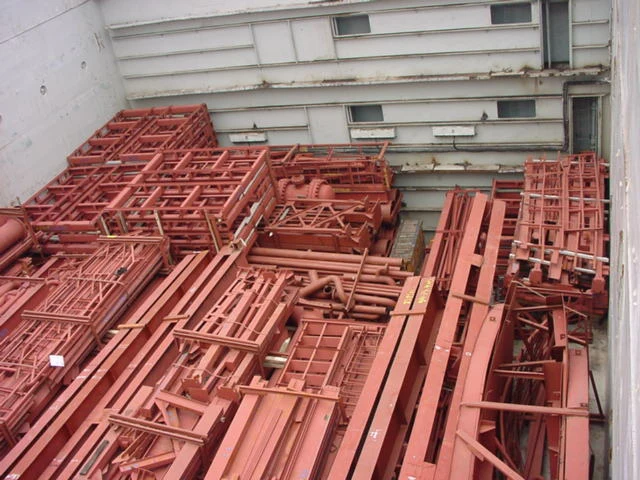
Steel structures stacked and separated in the hold, ready for lashing. 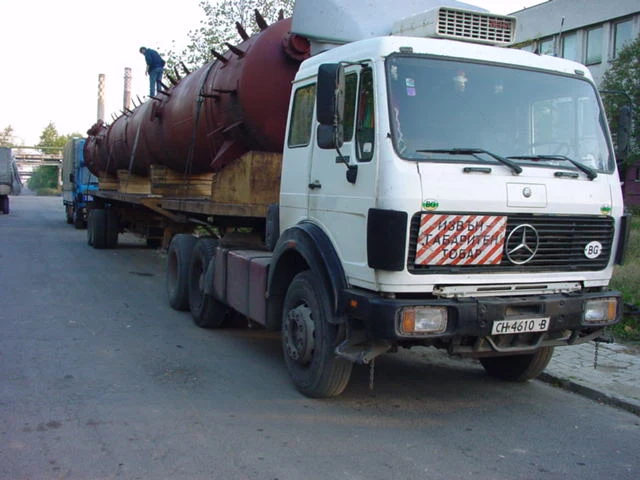
The tractor unit of an oversized-load convoy, warning board fitted, vessels loaded behind.
Workflow
How a construction shipment is organised
- 01
Unit list
Collect dimensions, weights and whether each machine can roll.
- 02
Mode choice
Match each unit to RoRo, flat rack, breakbulk or container.
- 03
Route choice
Direct to Latakia, via Mersin, or by road from Turkey, Jordan or Lebanon.
- 04
Securing
Plan lashing and bedding for the sea and road legs.
- 05
Import file
Prepare the Syrian customs documents before arrival.
- 06
Lowbed delivery
Carry oversized units inland on lowbed trailers.
Related services
Services behind this work
Each part of the movement maps to a MIDTRANS service.
Project cargo
Out-of-gauge and heavy units, flat rack and breakbulk.
Project cargoSea freight
RoRo, flat rack and breakbulk sailings to Syria.
Sea freightLand freight
Lowbed haulage and cross-border road transit.
Land freightCustoms clearance in Syria
Import documents prepared before the cargo arrives.
Customs clearanceNext step
Start with the cargo list
Share the cargo, origins, dimensions and timing. Submission does not confirm pricing, acceptance, booking, customs release or delivery.
Request a quote
Send the unit list with dimensions, weights and origin for operations review.
Request a quoteChina to Syria
Direct sailings to Latakia or via Mersin and on by road.
View the trade laneFAQ
Frequently asked questions
Clear answers for customers reviewing MIDTRANS services, routes, documents, and official support channels.
Which shipping mode suits heavy construction equipment?
It depends on the unit. RoRo suits machines that can roll on board. Flat racks suit units too wide or too tall for a standard container. Breakbulk suits the largest pieces and steel structures. Lowbed trailers carry oversized units by road.
Which routes do you use from China?
Direct sailings from China to Latakia, or discharge at Mersin in Turkey and road transit to Syria. Transhipment through Jebel Ali is another option.
Can cargo reach Syria through Jordan or Lebanon?
Yes. Cargo landed at Aqaba moves to Syria by road. Cargo landed at Beirut or Tripoli also moves to Syria by road.
What information do you need to quote a machine?
The make and model, the length, width and height, the weight, and whether the machine can roll on and off under its own power. Origin, destination and the ready date complete the file.
Do you ship prefabricated houses and pipes?
Yes. Prefabricated houses, HDPE pipes and ductile-iron pipes move with the rest of a construction programme. Packing, dimensions and weight decide the mode.
How are construction machines secured for the sea and road legs?
Lashing and bedding are planned for each leg before the unit ships: on deck for the sea leg and on the trailer for the road leg. For oversized units the road route is also checked to confirm it can take a lowbed load.
Next step
Discuss a shipment, customs question, or logistics requirement
Share the route, cargo, documents, and timing once. MIDTRANS can review the same structured request through WhatsApp, email, or the contact desk.
Origin, destination, pickup point, delivery point, and preferred freight mode.
Commodity, weight, volume, documents, readiness date, and customs questions.
Operations follow up through official MIDTRANS channels before any commitment.


