
Case study: petrochemical and industrial plants
Petrochemical Plant Logistics in Syria
MIDTRANS moved plant equipment, construction materials and liquid feedstocks for the petrochemical plant of the United Joint Stock Company for Petrochemical Industries in Damascus, Syria, between 2000 and 2004. The work covered the construction phase and continued into production. It combined heavy haulage, two chartered vessels, tanker transport and ISO tanks across Syria, Turkey and Lebanon.
Project cargoChartered vesselsISO tanks and tankers
MIDTRANS operations deskShipment Information
Plant equipment and liquid feedstocks moved for a petrochemical plant in Syria

Heavy plant equipment
Oversized units travelled on multi-axle trailers and were lifted with mobile cranes.
Chartered vessels
Two chartered vessels and tanker vessels carried project cargo and raw materials.
Liquid feedstocks
ISO tanks and tanker trucks carried liquid petrochemical feedstocks.
Customs coordination
Border and port formalities ran in Syria, Turkey and Lebanon.



International Shipping & Customs Assistant
MIDTRANS Operations Desk
Team review before pricing or operationsProject facts
The project at a glance
The plant produced linear alkylbenzene (LAB) on a site of approximately 25,000 square metres in Damascus. MIDTRANS handled its freight from 2000 to 2004, through the construction phase and into production.
- Client: United Joint Stock Company for Petrochemical Industries
- Location: Damascus, Syria
- Period: 2000–2004
- Site area: approximately 25,000 square metres
- Product: linear alkylbenzene (LAB)
- Countries: Syria, Turkey, Lebanon
The cargo
The cargo
The plant needed two kinds of freight. The first was the plant itself: industrial machinery, manufacturing equipment, plant components, heavy industrial units and construction materials. The second was what the plant runs on: liquid petrochemical feedstocks and related chemical raw materials. For LAB production, these included benzene and paraffin.
The equipment had to arrive while the plant was being built. The feedstocks had to keep arriving once production started.
- Industrial machinery and plant components
- Heavy and oversized units
- Construction materials
- Liquid petrochemical feedstocks
Logistics pattern
How we handled it
Sea freight carried project cargo and raw materials. MIDTRANS arranged and coordinated two chartered vessels for this work. Tanker vessels carried liquid cargo by sea. Port coordination linked each sea leg to the road leg that followed.
On land, the operation ran to more than 300 truck movements. Heavy and oversized plant equipment moved on multi-axle trailers. Mobile cranes, forklifts and port handling equipment worked the lifts. Liquid feedstocks moved in ISO tanks and by tanker truck. MIDTRANS also arranged the handling of substantial quantities of hydrofluoric acid (HF), a hazardous material, alongside the project cargo. Cross-border trucking connected Syria, Turkey and Lebanon.
Customs coordination ran alongside the freight in all three countries. Supply continued from the construction phase into the production phase. See project cargo and dangerous goods for how we plan each part.
- Two chartered vessels
- Tanker vessels and tanker trucks
- ISO tanks for liquid feedstocks
- Multi-axle trailers and mobile cranes
- Customs coordination
Typical challenges
Typical challenges
Petrochemical plant logistics combines project cargo and chemical supply on one programme. These are the points we plan for from the first enquiry.
- Heavy and oversized units that need route and lift planning
- Construction cargo and chemical cargo on the same programme
- Liquid feedstocks that must keep moving once the plant runs
- Several origins and more than one border
- Sea legs and road legs that must connect
- Chemical cargo that needs dangerous-goods review
The sector
What else this sector ships
We also move petrochemical intermediates and industrial chemicals. Chemical cargo is reviewed against the IMDG Code before booking. The shipper provides the classification and the safety data sheet. Carrier acceptance is confirmed before the booking goes out.
For cargo from further origins, see China to Syria and Europe to Syria.
- Petrochemical intermediates
- Industrial chemicals under the IMDG Code
- Classification and safety data sheet from the shipper
- Carrier acceptance first
Why MIDTRANS
Why MIDTRANS
Midtrans Shipping And Services was established in Damascus in 1998. Project cargo, chartering, road haulage and customs coordination sit with one team. Acceptance, provider availability and authority outcomes remain subject to confirmation for each shipment. More case studies.
- Established in 1998
- Offices in the UAE (Dubai, Jebel Ali) and Syria; partner office in Guangzhou and Hong Kong
- Sea, road and tanker transport
- Customs coordination
Photographs from the MIDTRANS project cargo gallery. They show the type of cargo and handling described here. They are not photographs of the work on this page.
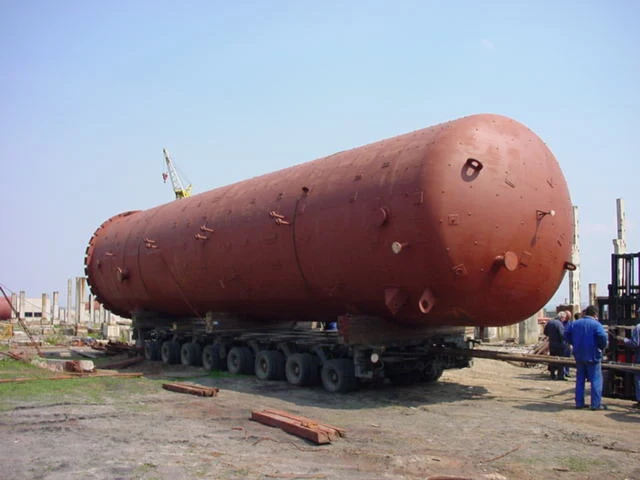
A large pressure vessel being positioned on a multi-axle transporter in the yard. 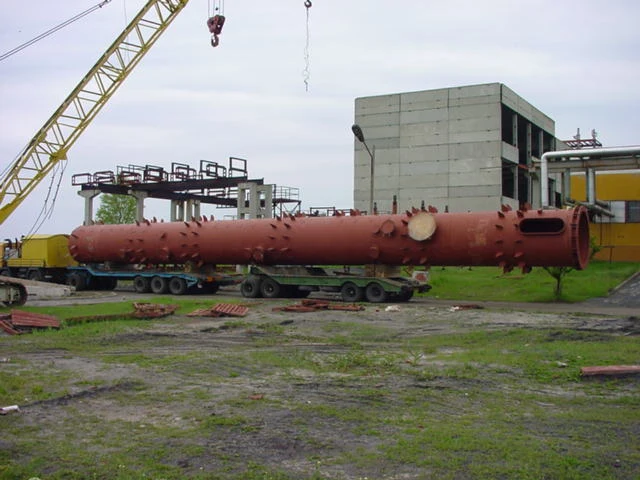
A long nozzled column on a trailer inside an industrial plant, crane standing by.
Workflow
How the movement was organised
- 01
Plan by phase
Separate construction cargo from production supply.
- 02
Heavy cargo
Load oversized units on multi-axle trailers and plan lifts with mobile cranes.
- 03
Sea legs
Arrange chartered vessels and tanker vessels for cargo and raw materials.
- 04
Liquid feedstocks
Move feedstocks in ISO tanks and by tanker truck.
- 05
Borders and customs
Coordinate customs across Syria, Turkey and Lebanon.
- 06
Continuous supply
Keep feedstock moving after production starts.
Related services
Services behind this work
Each part of the movement maps to a MIDTRANS service.
Project cargo
Heavy and oversized plant equipment, lift planning and heavy haulage.
Project cargoSea freight
Chartered vessels, tanker vessels and port coordination.
Sea freightLand freight
Cross-border trucking, heavy haulage and tanker trucks.
Land freightDangerous goods
IMDG review for chemical cargo and liquid feedstocks.
Dangerous goodsCustoms clearance in Syria
Import documents prepared before the cargo arrives.
Customs clearanceNext step
Start with the cargo list
Share the cargo, origins, dimensions and timing. Submission does not confirm pricing, acceptance, booking, customs release or delivery.
Request a quote
Send the cargo list, origins and phase of the project for operations review.
Request a quoteTurkey to Syria
Road and sea freight from Turkey, the corridor used on this project.
View the trade laneFAQ
Frequently asked questions
Clear answers for customers reviewing MIDTRANS services, routes, documents, and official support channels.
What did MIDTRANS move for the petrochemical plant?
Plant equipment and supply. For the build, that meant industrial machinery, plant components, heavy industrial units and construction materials. For production, it meant liquid petrochemical feedstocks and related chemical raw materials.
Which transport modes were used?
Sea and road. Two chartered vessels and tanker vessels handled the sea legs. On land there were more than 300 truck movements, including heavy haulage on multi-axle trailers, tanker trucks and ISO tanks for liquid cargo.
Which countries did the operation cover?
Syria, Turkey and Lebanon, with cross-border trucking between them. Further coordination covered procurement and transport from other origins.
Can MIDTRANS ship industrial chemicals?
Yes, subject to classification, packing, documents and carrier acceptance. Chemical cargo goes through a dangerous-goods review against the IMDG Code before booking. The shipper provides the classification and the safety data sheet.
Who was the client, and when was the work done?
The United Joint Stock Company for Petrochemical Industries, for its plant in Damascus, Syria. MIDTRANS handled freight for the plant between 2000 and 2004, from the construction phase into production.
What did the plant produce, and which feedstocks did it need?
Linear alkylbenzene (LAB), on a site of approximately 25,000 square metres in Damascus. Its feedstocks included benzene and paraffin, which moved in ISO tanks and tanker trucks, and MIDTRANS also arranged the handling of substantial quantities of hydrofluoric acid alongside the project cargo.
Next step
Discuss a shipment, customs question, or logistics requirement
Share the route, cargo, documents, and timing once. MIDTRANS can review the same structured request through WhatsApp, email, or the contact desk.
Origin, destination, pickup point, delivery point, and preferred freight mode.
Commodity, weight, volume, documents, readiness date, and customs questions.
Operations follow up through official MIDTRANS channels before any commitment.


